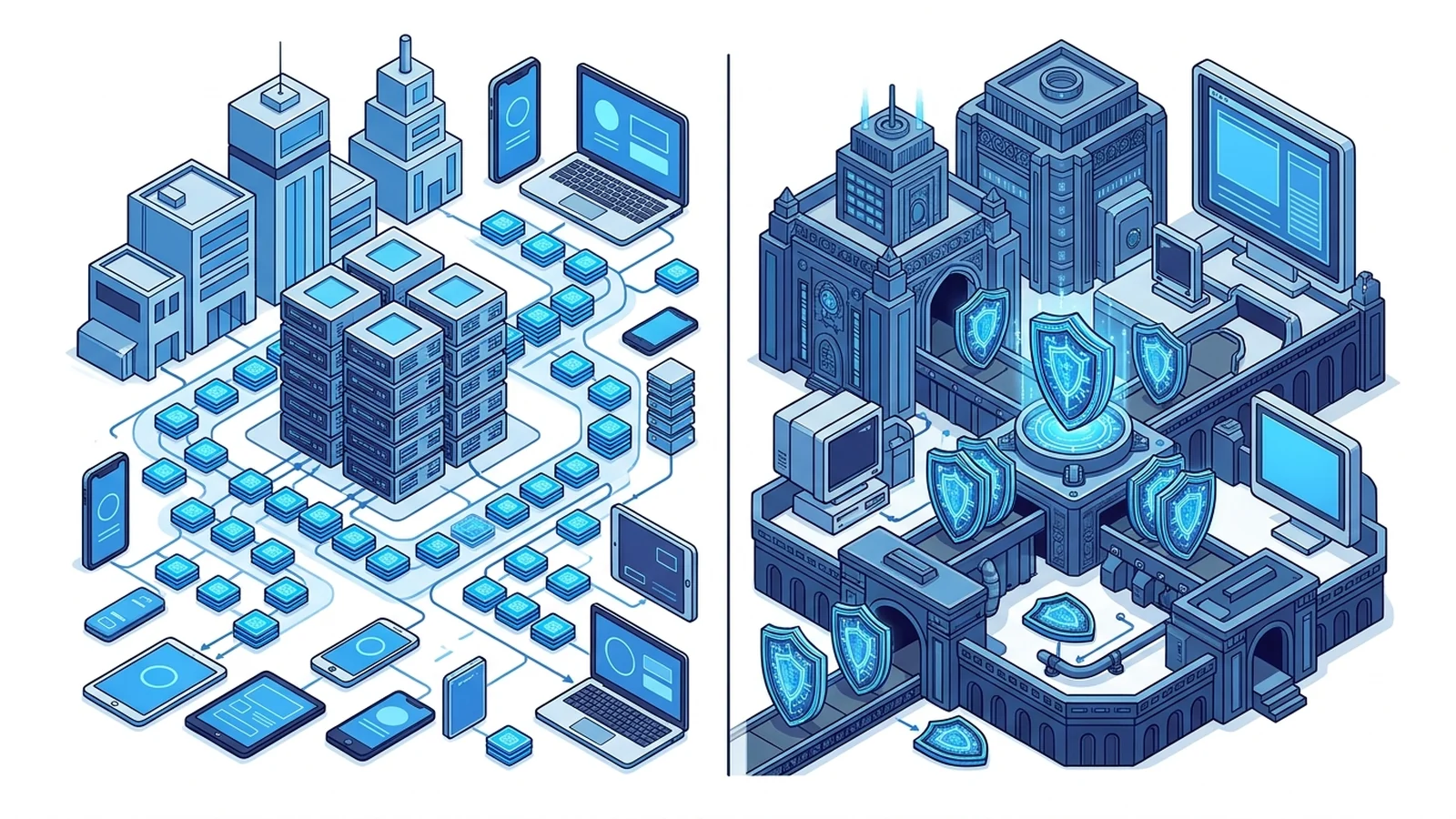
- OAuth 2.0 manages delegated resource access.
- SAML provides cross-domain single sign-on using signed XML documents.
- RFC 7522 bridges enterprise assertions into modern REST API tokens.
Understanding OAuth2 vs SAML authentication fundamentals
Understanding OAuth2 vs SAML authentication starts by separating identity checks from access rules. Security teams often compare them directly. Yet each standard solves a different technical challenge. SAML verifies who a user is during enterprise login. In contrast, OAuth 2.0 governs what an app can access. Choosing the right tool impacts token size, network speed, and security controls.
Modern workplaces rely on many tools. Workers log into an office portal in the morning. They check team email. They open web files. Single sign-on lets staff access these services without typing passwords repeatedly. Meanwhile, background workers talk over REST APIs without human help. Confusing these two roles causes broken access rules.
This guide explains network steps, payload sizes, digital signatures, and deployment patterns. Reviewing these facts helps systems teams choose the right setup.
Core architecture: authorization framework versus identity federation
The core difference sits in protocol intent. The IETF standardized OAuth 2.0 in RFC 6749 as an authorization framework. It shows how a client gets limited access to HTTP data. Crucially, raw OAuth 2.0 does not verify identity. It cannot report who logged in.
Teams add OpenID Connect for identity. This layer adds standard login flows on top of OAuth. It sends an ID token formatted as a JSON Web Token. Most modern OAuth login buttons actually run this combined stack.
SAML takes a unified approach. Standardized by OASIS, it handles single sign-on across enterprise web apps. An Identity Provider makes an assertion for a Service Provider. This signed XML file proves user login and shares role attributes.
Protocol message structures: XML assertions versus JSON tokens
Payload encoding creates major operational differences. SAML relies entirely on XML envelopes. Every assertion holds issuer data, validity windows, and digital signatures. Because of XMLDSIG wrappers, these documents often exceed five kilobytes.
Below is an example of a SAML assertion sent via browser POST.
<saml2:Assertion xmlns:saml2="urn:oasis:names:tc:SAML:2.0:assertion" ID="_a7f84b12" IssueInstant="2026-10-21T06:00:00Z" Version="2.0">
  <saml2:Issuer>https://idp.example.com/sso</saml2:Issuer>
  <ds:Signature xmlns:ds="http://www.w3.org/2000/09/xmldsig#">
    <!-- XML digital signature over assertion contents -->
  </ds:Signature>
  <saml2:Subject>
    <saml2:NameID Format="urn:oasis:names:tc:SAML:1.1:nameid-format:emailAddress">user@example.com</saml2:NameID>
    <saml2:SubjectConfirmation Method="urn:oasis:names:tc:SAML:2.0:cm:bearer"/>
  </saml2:Subject>
  <saml2:Conditions NotBefore="2026-10-21T05:59:00Z" NotOnOrAfter="2026-10-21T06:05:00Z"/>
  <saml2:AuthnStatement AuthnInstant="2026-10-21T06:00:00Z">
    <saml2:AuthnContext>
      <saml2:AuthnContextClassRef>urn:oasis:names:tc:SAML:2.0:ac:classes:PasswordProtectedTransport</saml2:AuthnContextClassRef>
    </saml2:AuthnContext>
  </saml2:AuthnStatement>
</saml2:Assertion>
In contrast, OAuth stacks favor compact JSON strings. OpenID Connect conveys claims inside signed web tokens. A web token separates headers, claims, and signatures with simple periods. Reading JSON requires minimal CPU time on phones and client browsers.
Below is an equivalent OpenID Connect token payload.
{
  "iss": "https://idp.example.com/oauth2",
  "sub": "usr_94820184",
  "aud": "client_app_39201",
  "exp": 1792562700,
  "iat": 1792559100,
  "email": "user@example.com",
  "email_verified": true,
  "roles": ["engineering", "admin"]
}
Compact token strings cut bandwidth on high-volume APIs. Read our guide on RS256 vs PS256 signature algorithms.
Feature matrix: comparing SAML 2.0 and OAuth 2.0 specifications
Comparing features helps teams pick the right tool for their stack. The table below lists key points.
| Capability | SAML 2.0 | OAuth 2.0 + OpenID Connect |
|---|---|---|
| Primary purpose | Workforce identity and web SSO | API authorization and user login |
| Governing body | OASIS standard | IETF and OpenID Foundation |
| Data transport format | XML documents and POST bindings | JSON objects and HTTP headers |
| Signing mechanism | W3C XML digital signatures | JSON Web Signatures (JWS) |
| Client architecture | Desktop browsers with cookies | Mobile apps, web SPAs, and APIs |
| Delegated API scopes | Limited; not built for APIs | Native scopes via RFC 6749 |
| Public client security | Requires trusted browser session | Protected via PKCE (RFC 7636) |
| Typical token footprint | 5 KB to 15 KB envelopes | 500 B to 2 KB compact tokens |
For more on API tokens, read our guide on OAuth2 vs API key authentication. Read our breakdown of basic auth vs bearer token flows.
SSO flows and browser redirects: how users authenticate
Single sign-on paths move proofs across networks in two ways. SAML uses browser redirects. A worker visits a web service. The app creates an auth request and sends the browser to the identity provider.
The identity provider checks user passwords. Then it makes a form with the signed assertion. The browser sends this form back to the app. The app checks the signature and sets a cookie. Direct server calls are not needed here.
OAuth with OpenID Connect uses code exchanges. First, the client starts a redirect with a PKCE code challenge. Once the user signs in, the server returns a temporary code. Then the app swaps that code for tokens over a direct server link.
This flow keeps tokens off browser screens. Read our comparison of TLS 1.3 vs TLS 1.2 handshake differences.
Bridging protocols: using RFC 7522 in enterprise environments
Enterprises do not have to discard existing tools. Large companies often bridge both systems across their architecture. Employees sign in to legacy portals using SAML assertions. At the same time, new microservices communicate with OAuth2 tokens.
The IETF defined this exact bridge in RFC 7522. Under this standard, clients pass a signed SAML assertion to an OAuth token endpoint.
POST /oauth/token HTTP/1.1
Host: auth.example.com
Content-Type: application/x-www-form-urlencoded

grant_type=urn%3Aietf%3Aparams%3Aoauth%3Agrant-type%3Asaml2-bearer
&assertion=PHNhbWwyOkFzc2VydGlvbiB4bWxuczpzYW1sMj0...
&client_id=api_gateway_consumer
The auth server checks the assertion signature. It then issues an access token with clear API scopes. This links microservices easily. No changes to central identity servers are required.
Architectural decision checklist: choosing the right standard
Choosing between these standards depends on your clients and tools:
| Operational criterion | Deploy SAML 2.0 | Deploy OAuth 2.0 + OIDC |
|---|---|---|
| Primary client interfaces | Desktop web apps with browser cookies | Mobile apps, single-page apps, and CLIs |
| API security requirements | Basic app login gates | Granular API rate limits and scopes |
| Workforce integrations | Active Directory or legacy Okta apps | Cloud identity platforms and social logins |
| Parsing compute limits | Dedicated enterprise web hosts | Low-power IoT hardware and mobile chips |
| Cryptographic governance | Enterprise XML schema rules | JOSE and JWT cryptographic tools |
Frequently asked questions about OAuth2 and SAML
Can OAuth 2.0 handle authentication on its own?
No. Base OAuth 2.0 handles access delegation. Teams add OpenID Connect to verify user identity.
Why do enterprises still run SAML systems?
Legacy internal portals and enterprise tools like Salesforce already use signed XML assertions.
Can systems trade SAML assertions for API tokens?
Yes. RFC 7522 lets modern apps present a signed assertion to get OAuth2 access tokens.
Which option fits mobile devices better?
OAuth2 with OpenID Connect works better. Compact JSON strings parse fast without heavy XML tools.